
Making Delaware the "heart-healthiest" state by 2025
Grace’s Story
The Grace Firestone Act
Our Founder
Follow Our Blog
Grace's Story
CHAPTER 61 - of Greer Firestone's Memoir - MY LIFE AS AN EDSEL
June 4 2011
THE NIGHT THE HEART STOPPED
(Enter Providence)
June 4, 2011.
Two days after high school graduation.
Grace walked into her mother’s bedroom and said,
“I don’t feel good.”
Then she collapsed—face down on the bed.
Her heart stopped.
There was no warning.
No cinematic pause.
Just silence where rhythm should be.
Her mother called 911.
Brother Grant—fresh from CPR training—put his sister on the floor and began compressions.
Hard. Fast. Relentless.
Not thinking.
Just counting.
One.
Two.
Three.
The brain is waiting for nourishment.
By pure providence, New Castle County EMS was three miles away.
They arrived in under three minutes—ambulances, lights, commands, control.
Officer Justison, NCC Police, was first on scene.
He cleared space.
Directed traffic.
Turned panic into procedure.
The bedroom became a resuscitation bay.
Pads on.
Shock delivered.
Once.
Twice.
Again.
All told -- 9 times.
They drilled into her shin—intraosseous access, straight through bone—pushing medication directly toward the brain.
It is not gentle.
It is effective.
Her heart stopped three more times that night.
On the way to Christiana Hospital, Grace stopped breathing.
The heroes never gave up.
A frantic mom called me:
“Grace had a heart attack. We’re on our way to Christiana.”
ME: What? She’s eighteen!
I rushed down.
By the time I reached the ER, Mom and Grant were already in a private waiting room — stilled, emptied, caught between hope and the unthinkable.
Thiry minutes later a young doctor knelt in front of us.
A doctor entered — young, kind-faced, steady. He knelt in front of us.
DOCTOR: “There’s a good chance we’ll lose her. Do you want to see her now?”
We followed him down the corridor.
Inside the trauma bay, our daughter lay barely clothed, surrounded by a dozen medical professionals shouting orders. Pads. Wires. Alarms.
Mom put a hand on my shoulder.
MOM: “Let’s wait outside.”
We stood in the hall — silent, numb, terrified.
Two hours later, another doctor emerged.
DOCTOR: “She’s being moved to the ICU. Induced coma. Ventilator. You can see her now.”
Nothing prepares you for seeing your child that way — pale, still, tubes everywhere, the hiss of machines keeping time. Machines doing what her body could not.
DOCTOR: “She’s being moved to the ICU. Induced coma. Ventilator. You can see her now.”
Nothing prepares you for seeing your child that way — pale, still, tubes everywhere in her body, the hiss of machines keeping time.
Machines took over what her body could not.
This made no sense.
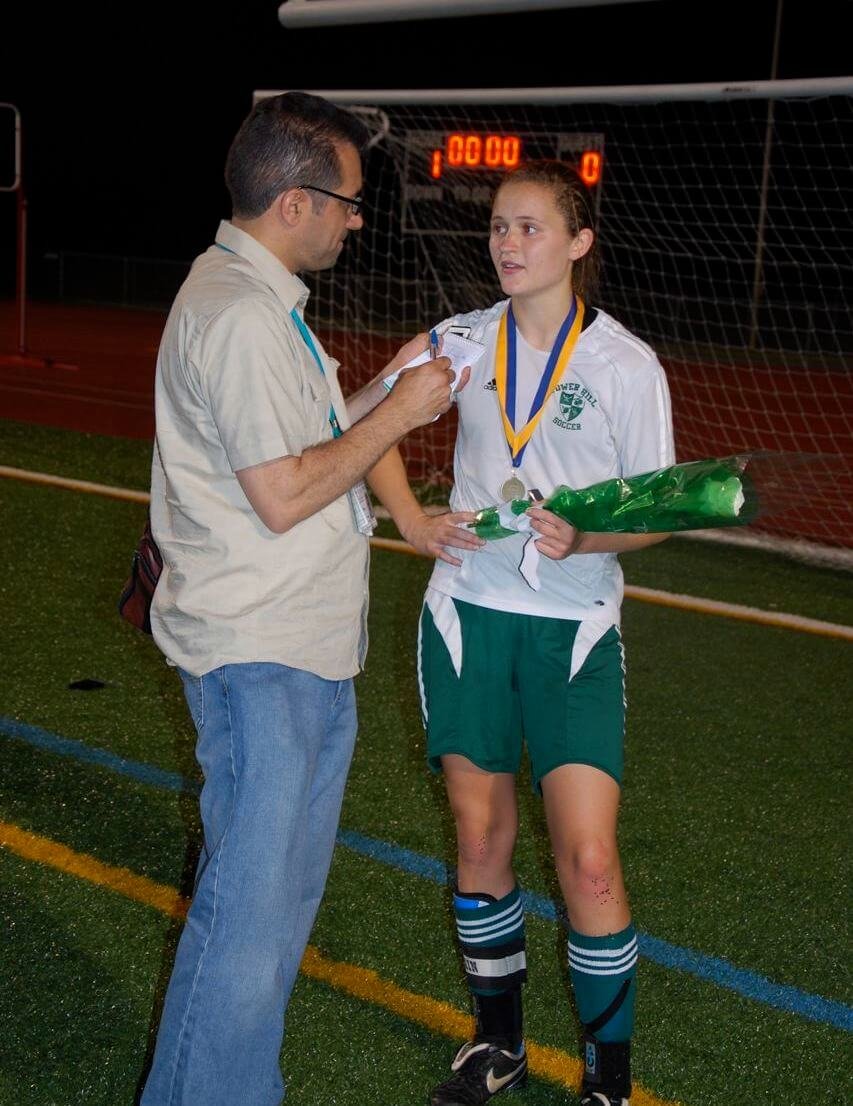
She was an elite athlete.
Fifteen varsity letters.
Six-time team captain.
First Team All-State soccer for three years.
A 3.93 GPA.
Student body president.
No family heart history.
No red flags.
Just sudden collapse.
They tried everything: the cooling protocol, controlled hypothermia, warming again when her body refused to cooperate.
For 4 days, no movement. No sign.
Just the humming of life-giving machines.
The 5th day—after tubes were removed, machines silenced, fear downgraded to vigilance—
Grace, hair a little wild, smile cautiously back in service, got up and went to the bathroom
“My leg is killing me”.
(That’s what happens when one drills directly into the shin to deliver fluids to the brain).
We laughed. We cried. We thanked God for pain.
Ten days later, Grace walked out of Christiana Hospital.
Alive.
Whole.
With an implanted defibrillator—an ICD—guarding her heartbeat.
No permanent damage.
The doctors did their job.
The system worked.
Police Officer and EMS heroes visit Grace at Christiana
JUSTISON: “Hey, Gracie.”
She looked at them, curious.
GRACE: “Hi…?”
Kyle shifted his weight, hands clasped, the way people do when they’re about to say something that still feels unreal.
KYLE RICE: “I’m Kyle. I was… there that night.”
A pause.
KYLE: “I was the one who shocked you.”
Grace blinked.
GRACE: “You… what?”
KYLE (gentle): “I paddled you. More than once.”
Silence filled the room—not fear, not dread—something else.
Recognition trying to find language.
GRACE: “So… you’re the reason I’m here.”
KYLE: “No. You’re the reason you’re here.
I just helped your heart remember.”
Officer Justison smiled, small.
JUSTISON: “Your brother did the heavy lifting before we got there.
He didn’t hesitate.”
Grace nodded slowly, absorbing the chain of events like a relay race she’d never known she was running.
GRACE: “I don’t remember any of it.”
KYLE: “That’s okay. Your heart remembers enough for both of us.”
They didn’t stay long.
They never do.
After the door closed, Grace sat quietly for a moment.
Then she said:
GRACE: “I think I need to do something with this.”
ME: “With what?”
She tapped her chest—right over the ICD.
GRACE: “With the fact that people showed up ready.”
WHY THIS MOMENT MATTERS
That visit completed the circle.
The night had been chaos—
voices, shocks, commands, speed.
The return was different.
It was accountability without ego.
Care without ownership.
It taught Grace—and all of us—that survival isn’t anonymous.
It has names.
A brother who knew CPR.
Officer Justison.
Paramedic Kyle Rice.
A system that arrived prepared.
The Girl Who Would Not Quit
The love from Tower Hill School poured in like a tidal wave — cards, photos, prayers, paintings. The waiting room overflowed with students and teachers.
Nurses whispered each other, “Who is this kid?”
A father in scrubs approached me.
DOCTOR: “Mr. Firestone, my son’s in fourth grade. He came home last night and said, ‘Dad, you’ve got to save Grace.’
“I told him I’d do everything I could. He didn’t understand that I’m an orthopedist.”
Ten days later, she walked out of Christiana Hospital with an implanted defibrillator.
Alive. Whole.
Her cardiologist advised, ‘I would prefer no more contact sports.’
Quite a message from the doc.
I don’t recall Grace ever having a doll. She came out of the womb an athlete. The neighborhood boys would be crying when Grace bested them in everything.
Due to her doctor’s dictate, she fell into depression. What would her life be without sports?
UCLA Health
Finally, she made her own decision: ‘prefer’ was the operative word. Screw it. I’m playing.
ACT III — “I’m More Than Okay”
That fall, Grace entered the University of Delaware Honors Bio Program --three months after dying.
She kept up with classes, rehab, and the endless, maddening question:
“Grace, how are you feeling?”
Her answer:
“I’m more than okay.”
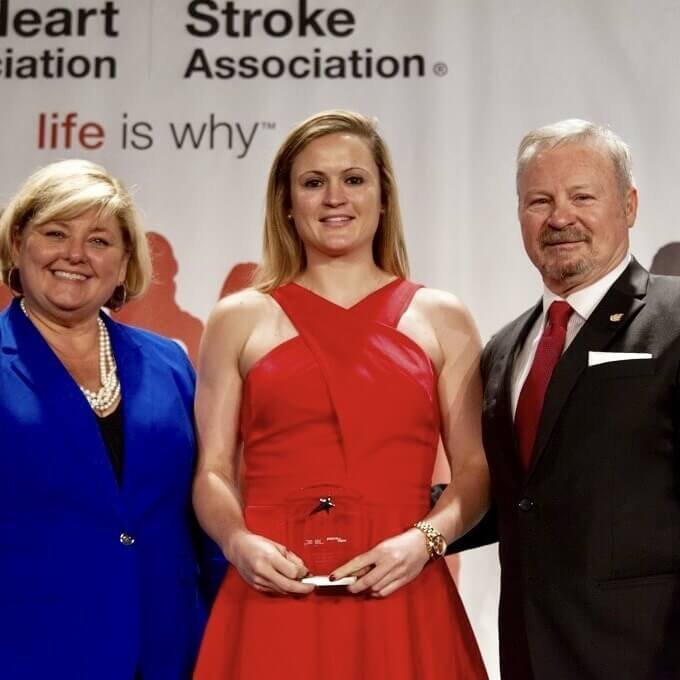
She went on to win the National Spirit of Sport Award and Youth in Philanthropy Award — not for surviving, but for refusing to stop living.
Then she did something drastic.
GRACE: “I need to prove I’m not fragile. I’m tired of telling people I’m okay. I need to show it”.
And she did.
With support from Senator Chris and Annie Coons, Grace launched Let the Kids Play, collecting used sports equipment for children in need. She raised $8,000 for an orphanage in Kenya — soccer balls, cleats, courage.
That Christmas, Grace boarded a plane to Tanzania.
She climbed Mount Kilimanjaro — 19,341 feet — with the ICD in her chest and a personal drive that is unsurmountable.
Coincidentally, Senator Coons was to visit Africa for a conference of African leaders.
Annie Coons accompanied him with Grace’s soccer balls.
When a monsoon washed out the roads, Annie hiked the last miles on foot to deliver the gear.
After the climb, Grace visited the orphanage and played soccer with the kids.
Returning home, the question ‘how are you feeling’ was put to rest.
The Field Where She Belonged
She couldn’t play Division I soccer. Rules. Liability. Fear.
She joined the University of Delaware Club Soccer Team — the purest version of the game: no scholarships, no spotlight, just sweat and joy.
Mom and I watched every match. Every 50–50 header ball was agony.
The opponents surely did not know.
One collision could trigger the ICD.
At a home game one crisp October day, a stranger leaned over.
STRANGER: Is that your daughter?
ME: Yeah.
STRANGER: She’s a machine.
ME (quietly): No, my friend. She’s a miracle. If you only knew.
After graduation Grace went on to Sidney Kimmel Med School in Philly. She is now a General Practitioner in LA
Grace’s own words:
“I was 18. The doctors were telling me I couldn’t play the sport I loved, that I couldn’t study. Mentally, that didn’t correspond with the life I wanted to live. I had to keep pushing forward in my recovery”.
Grace Firestone, MD
UCLA Health
The remaining question
This experience raised a terrifying question:
What about the victims when EMS didn’t arrive?
Because survival shouldn’t depend on luck, distance, or who happens to be in the room.



2025 Amendments to the 2014 Grace Firestone Act for Sudden Cardiac Awareness
Facts regarding Sudden Cardiac Arrest
Our Most Precious Possessions
7037 kids per year
OR
20 kids/day (on average) DIE in the US from Sudden Cardiac Arrest
- #1 Killer of Student Athletes
- #2 Medical Cause of Death
- #1 Cause of Death on School Campuses
Approximately 350,000 to 400,000 people die from Sudden Cardiac Arrest (SCA) each year in the United States alone.
Globally, the number of deaths from SCA is estimated to be around 5 to 6 million per year. SCA is a leading cause of death worldwide, often occurring without warning.
One in 10 survive SCA. With CPR/AED intervention, survival rate improves to 1 in 5.
Key Statistics:
- Survival Rate: Out-of-hospital SCA survival rate is less than 10% without intervention, but it can rise to 40% with immediate CPR and defibrillation.
- Public Awareness: Most SCAs occur at home (about 70%), highlighting the importance of family CPR training.
House Bill 71 – Toward the “Heart Healthiest” State
Sponsored by: House Majority Leader Kerri Evelyn Harris and Senator Nicole Poore
House Bill No. 71 – Representative Harris
An Act to Amend Title 14 Relating to Interscholastic Athletics
Key Provisions & Assumptions:
- Becomes effective upon Governor’s signature.
- Requires AEDs to be clearly marked and accessible at middle and secondary school athletic events and venues, during the school day, and during any student-participating school-sponsored practices or games.
- AEDs must follow nationally recognized placement guidelines and be regularly tested/maintained per manufacturer instructions.
- Roughly 80 schools would be affected across Delaware.
- Based on district responses, most schools will require 1–2 additional AEDs for full compliance.
Status: Unanimously passed the Education Committee on May 7. Now awaiting a full House vote, followed by the Senate and Governor's signature.


Words From Our Sponsors
Bill sponsor Sen. Bethany Hall-Long, D-Middletown, said the law reinforces actions already being taken by the Delaware Interscholastic Athletic Association. Hall-Long, who authored a law requiring screenings for athletes who may have suffered a concussion, has been on the forefront of protecting the health of young athletes.
“Thanks to the tireless efforts of health advocacy groups and of Grace and the Firestone family, we’re here to provide new protection for young athletes,” Hall-Long said “With the training and information this law requires, we’re going to give young athletes a better chance of surviving, if they should suffer a sudden, unexpected cardiac incident while they’re on the field.”
Our Impact
“Today, Delaware joined the increasingly pertinent nation-wide movement to provide high-school coaches, parents, and students with lifesaving CPR information,” Firestone said. “Because of persistent legislators and organizations dedicated to raising SCA awareness, Delaware is working to shift the balance to make SCA survival less of a far-reaching miracle and more of a prevailing standard. I will continue to live in gratitude for those family members, policemen, and EMT's who never gave up on my life, and promise to forever work with passion, heart, and purpose to pay that commitment forward.”
She attends the University of Delaware and has started a charity to provide athletic equipment to disadvantaged children. At the bill signing, Markell said her story "reminds us why we’re here and it helps inspire us to see that we can do more to protect our kids."
At the signing of The Grace Firestone Act is the 9th such bill in the nation. As of November of 2105 there were ONLY NINE states with similar legislation. THAT IS RIDICULOUS.For those from other states who would wish information for your legislators, please connect with me! This is a wonderfully collaborative bill, molded by all the statewide stakeholders AND budget neutral.
Sen. Bryan Townsend, D-Newark, co-sponsored the measure, which he hopes will protect young athletes.
“It’s shocking to think that these sudden, unexpected heart attacks are the No. 1 killer of young athletes, but that’s the case,” Townsend said. “We know that, in some cases, quick reaction can save the lives of these young people which is why I supported the training this law will require.”
Added Sen. Cathy Cloutier, R-Heatherbrooke, “As a member of the General Assembly, it is my responsibility to work on and promote legislation that will serve the people of Delaware, including student athletes. I am honored to have had the opportunity to play a role in SB 205. Because of this bill that’s being signed today, young lives in our state will be saved.”
Rep. Mike Ramone, R-Pike Creek South, also a co-sponsor of the bill, stated, “As a person who has dedicated his entire adult life to running health and fitness clubs and sports programs for our young athletes, I am very proud to have helped champion this important legislation. I believe that we are making a life-saving commitment to our student athletes and their families by enacting this bill.”
SB 205 is known as the Grace Firestone Act, named for a former three-sport star at Tower Hill, who also excelled in the classroom, exemplifying the value that athletics can have as part of the educational experience. Now Grace, who attended the bill signing, is one of the rare survivors of Sudden Cardiac Arrest, having collapsed in her home two days after her high school graduation.
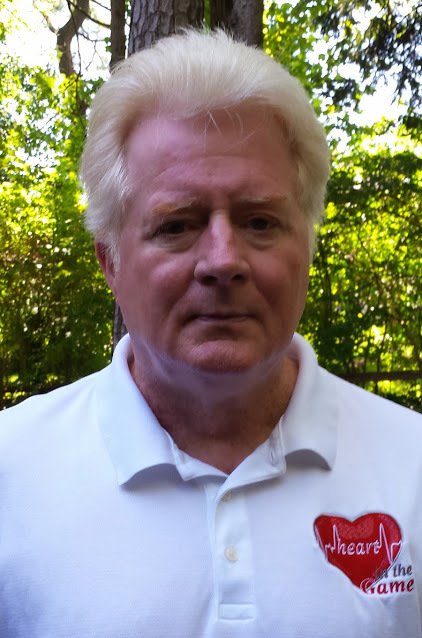
Greer Firestone Biography
A phone call at midnight. "Grace had a heart attack". NO! That could not happen to an elite athlete. There was no family heart history. We soon learned that Grace suffered not a heart attack but Sudden Cardiac Arrest. What was that? SCA is entirely different. If one is not given CPR/AED within 5 minutes....yes, 5 minutes, the patient either succumbs or suffers cognitive issues and will never be the same. We did research. We gathered all the stakeholders in Delaware and created The Grace Firestone Act for Sudden Cardiac Awareness, mandated in 2014. However, that was not enough. We founded Heart In The Game.org that same year to give Delaware students EKG screenings and to train in CPR/AED. A pre-participation physical for sports identifies 8% of heart abnormalities. Family history identifies 20%. A simple, 5 minute, non-invasive EKG identifies 90%. Yes, an EKG can save one life. Knowledge of CPR/AED can save tens of lives. Parents think their otherwise healthy looking kids are invulnerable. The Firestone family certainly thought Grace was invulnerable. You never know. Why take the chance?
- Greer Firestone